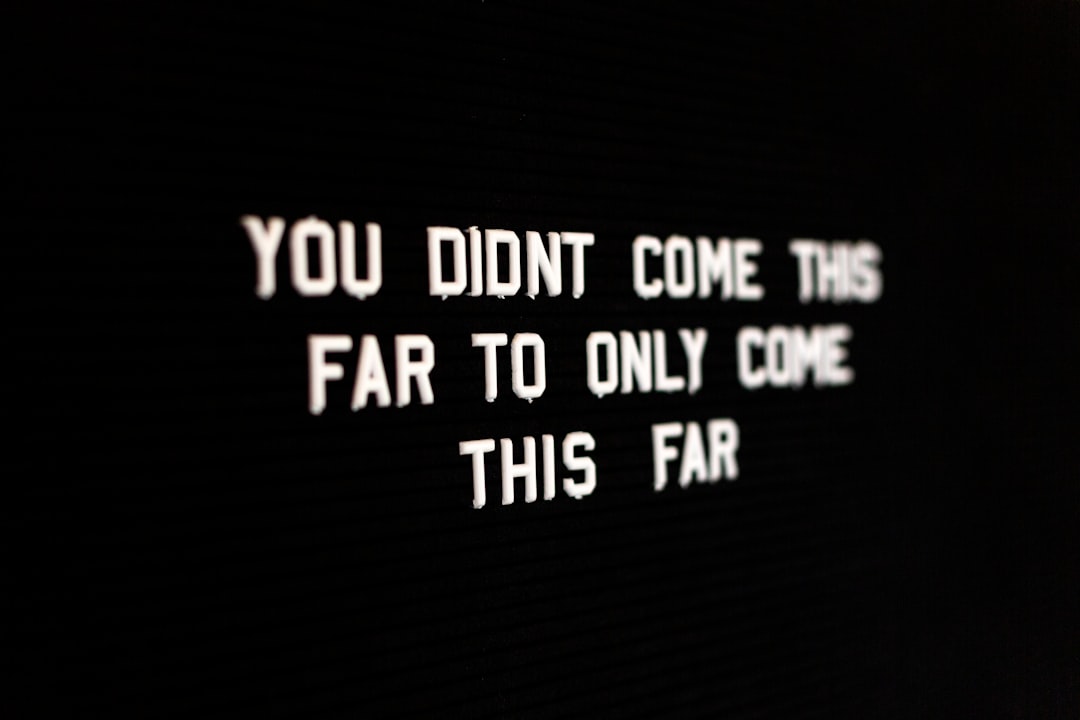
Warren Buffett’s best-known cautionary idea is simple and devastatingly useful: investors can do serious damage by missing the market’s best days. That warning is bigger than a finance headline. It is a clean, memorable content hook for a multi-platform series that teaches behavioral lessons from legendary investors while giving audiences a practical way to avoid common errors. For creators, publishers, and educators, this format turns a single quote into a repeatable framework: one mistake, one lesson, one countermeasure, one shareable takeaway.
That structure matters because audiences rarely respond to abstract advice alone. They respond to contrast, specificity, and utility. A quote board built around Buffett’s warning can become a high-performing content series that is easy to serialize, simple to repurpose, and naturally suited to social captions, carousel posts, newsletters, and short videos. If your goal is shareable episodes with a clear call to action, this is one of the cleanest formats available.
Below, you’ll get a definitive playbook for building the series: what Buffett’s warning actually means, which investing mistakes to cover, how to turn each mistake into a content episode, and how to end every installment with a countermeasure your audience can use immediately. Along the way, you’ll also find practical examples of audience education, suggested post structures, and editorial tactics for consistency. If you want the quote board to do more than collect likes, this guide shows how to make it function as a durable learning asset and a conversion-friendly content system.
1. Start With the Quote: Why Buffett’s Warning Works as a Series Engine
The quote is emotionally memorable and behaviorally useful
Buffett’s warning about missing the best days works because it compresses a complex market truth into one sentence people can remember after scrolling away. It teaches that investor returns are often shaped by a few decisive moments, not by constant activity. That is an ideal opening message for a quote board because it is both alarming and actionable: the fear of being out of the market too long invites reflection, while the lesson on patience helps frame better behavior. In content terms, this gives you a strong “before/after” narrative without sounding preachy.
The best quote-based series do not merely repeat the quote; they unpack it. Each episode can reveal one common mistake, such as panic selling, overtrading, or performance chasing, then show how the mistake conflicts with Buffett’s core idea. This is especially effective in high-stakes topics where audiences want confidence but also reassurance. Finance content can be intimidating, so the quote becomes a bridge between expertise and empathy.
Why “missing the best days” is such a powerful content hook
The phrase is vivid because it forces a trade-off into focus. It reminds audiences that market timing errors can matter more than a slightly higher fee, a shinier chart, or a flashy “best stock” idea. That makes it a highly usable opening line for a content series about investing mistakes and human behavior. It is also ideal for creators who want to teach without overwhelming; the quote creates a familiar anchor before you move into more nuanced behavioral lessons.
In practice, the quote should be treated as the “series thesis,” not the whole message. Your content series can start with the idea that long-term outcomes are shaped by staying power, then branch into the specific ways investors sabotage themselves. This approach mirrors the logic in the best educational frameworks: establish a principle, identify common failure modes, and end with a corrective action. It is the same reason outcome-focused metrics work so well in AI programs—people need a target, a diagnosis, and a way to know whether they are improving.
How quote boards become multi-platform content systems
A quote board is not just a static design asset. When structured properly, it becomes a content engine that can feed carousels, reels, email lessons, LinkedIn posts, website modules, and even short-form video scripts. Buffett’s warning is broad enough to support multiple episodes, yet specific enough to feel coherent across platforms. That is what makes it ideal for a series format: one recurring theme, many different mistakes, one consistent brand voice.
For publishers, the advantage is compounding. One source quote can generate an introductory post, a supporting thread, a quiz, a “what to do instead” checklist, and a recap newsletter. This is similar to how a smart editorial team approaches modern page authority: not as a single asset, but as a connected cluster of useful content. The quote becomes the hub, and each mistake episode becomes a spoke.
2. Define the Series Format: The Repeatable Template Behind Every Episode
Use a fixed episode structure to reduce production time
If you want a quote board to scale, every episode should follow the same pattern. Start with the quote or a paraphrase, name one mistake, explain why people make it, show the cost of the mistake, and end with a practical countermeasure. This structure keeps the series readable and makes it easy to assign, approve, and repurpose. It also lowers the cognitive load on your audience, which is essential when you are teaching behavioral lessons in a crowded feed.
A reliable template might look like this: “Buffett’s warning,” “mistake in plain English,” “what it looks like in real life,” “what to do instead,” and “one-line CTA.” That last line is what makes the episode shareable. You are not simply educating; you are inviting the audience to save, comment, or send it to someone who needs the reminder. For creators who need repeatable promotional assets, this is a much stronger approach than posting isolated quotes with no follow-through.
Design for platform-native delivery, not one-size-fits-all reuse
The same episode can be adapted across multiple channels, but each platform should be treated differently. On Instagram or TikTok, lead with the consequence and keep the remedy in a punchy closing line. On LinkedIn, expand the behavioral lesson with a short market observation. In email, pair the quote with a quick teaching note and a clickable action prompt. If you want to build efficient microcopy systems, pair this with micro-feature tutorial framing so each episode teaches one thing well.
Think of the series as a modular library. You are not writing one long essay and chopping it up. You are building a reusable editorial architecture that supports platform-specific rewrites. That matters because creators often waste time recreating the same idea from scratch for every channel. A quote board with a stable format solves that problem and makes it easier to keep voice, pacing, and educational value consistent. For teams balancing content volume and limited resources, this mirrors the efficiency benefits found in automation workflows: repeatability creates speed without sacrificing quality.
Build each episode around one mistake and one countermeasure
The biggest editorial mistake is trying to teach too much in one post. If every episode covers three errors, two stats, and four recommendations, the audience will remember none of it. One mistake per episode is cleaner, easier to save, and more likely to be shared. The countermeasure should be practical enough to use that day: set a rule, automate a reminder, write a checklist, or pause before trading.
This is where the quote board becomes educational rather than decorative. Each piece should create a small behavioral shift, not just awareness. That shift might be “don’t react on headlines,” “don’t chase what already ran,” or “don’t confuse confidence with competence.” The format is simple, but it becomes powerful when repeated consistently across a series. This is the same logic used in strong creator platforms and product education systems, where narrative templates help people absorb a lesson in one sitting.
3. The Core Investing Mistakes to Feature in the Series
Panic selling after volatility spikes
Panic selling is one of the clearest violations of Buffett’s warning. When markets drop sharply, many investors sell because fear feels safer than uncertainty. The result is often selling after losses and then missing the rebound. This is the exact behavior that turns short-term discomfort into long-term underperformance. It is also one of the easiest mistakes to explain visually, which makes it perfect for a quote board episode.
The countermeasure should be simple and repeatable: create a written rule for what would justify a sale before volatility arrives. A “hold unless fundamentals change” rule, for example, is much easier to follow than an emotional reaction after the fact. If you need an audience-friendly framing device, this is a good place to use a “when markets get loud, follow the plan” message. It aligns nicely with the discipline behind cost-aware investing research and the broader principle that process beats impulse.
Chasing performance after the best gains already happened
Another common error is performance chasing: buying what recently went up because it feels validated by price momentum alone. Investors often mistake recent success for future quality, which leads them to enter late and exit early. This is a behavioral trap because the asset looks safe precisely when it is most crowded and least cheap. Buffett’s warning is useful here because it reminds audiences that returns are shaped by participation over time, not by arriving after the move is mostly over.
The countermeasure is to shift from “what has worked lately?” to “what fits my thesis now?” That single question reframes the decision from social proof to disciplined selection. For content creators, this makes a strong episode because it is relatable across markets, from stocks to creator trends and even product launches. In other words, the lesson transcends investing and becomes a broader audience education tool about timing, patience, and evidence.
Overtrading because activity feels productive
Many investors equate activity with intelligence. They buy, sell, rebalance, and tweak because sitting still feels like doing nothing, even when doing nothing is the smarter move. This mistake is particularly damaging because transaction costs, taxes, and emotional fatigue accumulate silently. A quote board episode on overtrading can show that “busy” is not the same as “effective,” which makes it highly relevant to long-term wealth building.
The countermeasure should be a “fewer decisions, better decisions” rule. One practical version is to limit portfolio review to a fixed schedule instead of checking prices constantly. Another is to establish a threshold for when a change is warranted. This kind of behavioral lesson pairs well with a broader discussion of decision filters, similar to how outcome-focused metrics keep teams from optimizing noise instead of results.
4. More Mistakes Worth Turning Into Shareable Episodes
Ignoring valuation and overpaying for quality
Buffett is famous for arguing that quality matters, but not at any price. Investors often hear “buy great businesses” and forget the second half of the lesson: price still matters. Overpaying can flatten future returns even when the company itself is excellent. This is a useful episode for a quote board because it adds nuance, showing that discipline is not anti-quality; it is pro-reasonable entry.
The countermeasure can be framed as “great business, fair price, clear thesis.” That phrase is concise enough for a graphic and memorable enough for a caption. You can also show a simple before-and-after example: a company with strong fundamentals bought at an inflated multiple versus the same company bought at a reasonable valuation. For creators targeting educated audiences, this episode works especially well when paired with valuation discipline and the idea that paying attention to price protects future flexibility.
Confusing noise with signal
Investors frequently react to headlines, hot takes, and short-term charts instead of reviewing the actual business or thesis. That confusion leads to reactive behavior and shallow conviction. In a quote series, this is a strong teaching moment because the audience can immediately recognize the habit in themselves. Buffett’s warning indirectly supports the idea that the best returns often come from staying calm through noise, not from chasing every signal that flashes on screen.
The countermeasure is to define a “signal checklist” before consuming more commentary. Ask whether the news changes fundamentals, cash flow, competitive position, or risk profile. If it does not, treat it as background noise. This sort of audience education is especially effective when you want your series to feel practical rather than theoretical, much like the approach in enterprise research workflows that filter signal from informational clutter.
Lack of a long-term plan
A surprising number of investing mistakes come from not having a defined plan at all. Without a framework for goals, time horizon, risk tolerance, and behavior during drawdowns, people default to emotion. The result is a portfolio that behaves like a mood ring. This is one of the most powerful episodes you can make because it turns a quote into a planning conversation, which deepens trust with the audience.
The countermeasure should be a concrete planning step, such as writing down your target time horizon and the conditions under which you would exit. Better still, turn it into a downloadable checklist or a pinned comment prompt. The objective is to move the audience from inspiration to action. That mirrors the value of practical how-to content in other domains, including story-driven frameworks and operational systems that help people act consistently.
5. A Content Blueprint: Turning One Buffett Quote Into a Full Series
Episode mapping for a 7-part or 10-part series
The easiest way to launch is to map the quote into a fixed number of episodes. A seven-part series could cover panic selling, performance chasing, overtrading, overpaying, failing to diversify, ignoring time horizon, and lack of a written plan. A ten-part series could add leverage misuse, herd behavior, revenge trading, and mistaking short-term luck for skill. The exact length matters less than the consistency of the structure and the clarity of the lesson.
Each episode should be self-contained. That means a viewer should understand the lesson even if they missed the previous post. At the same time, the series should accumulate meaning as it progresses, with each episode reinforcing the larger Buffett idea. This is why series format content works: it encourages repeat consumption while still being easy to start from any point. The structure is similar to product education in platforms where interactive engagement helps audiences return for the next installment.
Suggested episode formula for creators
Use this repeating formula for each post: quote hook, mistake title, one-sentence explanation, real-world consequence, countermeasure, CTA. The CTA should be action-oriented, such as “Save this for your next market check-in” or “Share this with someone who checks their portfolio too often.” The call to action should not feel bolted on; it should naturally extend the lesson. That makes the content more likely to be saved, forwarded, and referenced later.
If you want the series to feel polished, standardize the visual language as well. Keep the quote placement consistent, use a simple color hierarchy, and make the countermeasure visibly distinct from the mistake. This is especially useful when your series is being viewed on mobile, where skimmability matters. For teams handling content at scale, the same principle behind workflow automation applies: standardization frees creative energy for the message itself.
How to avoid sounding repetitive
The challenge with a quote board series is repetition. You want the format to feel familiar, but not stale. The solution is to vary the examples while keeping the framework stable. One episode can be about stock investors, another about mutual fund flows, another about a creator making impulsive business decisions. The lesson stays the same, but the context changes enough to keep the audience engaged.
You can also vary the emotional angle. Some episodes should feel cautionary, others corrective, and a few should feel reassuring. That tonal range prevents the series from becoming doom-heavy. It also gives your brand a more thoughtful voice, which is especially important if your audience wants educational content that respects their intelligence. In that sense, the series can function as both a teaching tool and a trust-building asset, much like the careful framing used in conversion-focused content.
6. Comparison Table: Quote Board Series Formats and Their Best Uses
Not every quote board should be delivered the same way. Some formats are better for teaching, while others are better for engagement or reach. Use the table below to choose the best format for your audience and channel mix.
| Format | Best Use | Strength | Risk | Best CTA |
|---|---|---|---|---|
| Single-image quote card | Fast social sharing | Immediate readability | Can feel generic | Save this reminder |
| Carousel episode | Audience education | Allows deeper explanation | Drop-off on later slides | Swipe, save, share |
| Short-form video | Reach and discovery | Human tone and higher retention | Harder to keep concise | Follow for episode 2 |
| Email lesson | Trust and retention | Direct relationship with audience | Smaller immediate reach | Reply with your biggest mistake |
| LinkedIn post | Professional authority | Good for commentary and nuance | Can become too dense | Comment with your rule |
The right format depends on your distribution strategy, but the core lesson should stay the same. Keep the quote, identify the mistake, and end with the countermeasure. That repetition helps audiences learn and helps your team produce content faster. It also supports a stronger content series architecture, which is valuable for creators who need dependable, modular educational assets.
7. Publishing Tactics: How to Make the Series Travel Across Platforms
Use a launch sequence, not a one-off post
One of the biggest mistakes brands make is posting a quote once and moving on. A better approach is a launch sequence: the core quote card, a follow-up carousel on mistakes, a short video on one major error, and a recap post with audience responses. That gives the audience multiple entry points while reinforcing the same theme. It also creates more opportunities for engagement without requiring entirely new ideas each time.
For maximum reach, rotate the same core episode through different formats over a few days. Start with the quote board, then share a commentary post, then publish a practical checklist, and finally ask a question that prompts replies. This is where the series becomes a true content engine rather than a single design asset. The method resembles how research-driven publishing systems build authority through repetition and synthesis.
Make the countermeasure the most memorable part
Many educational posts explain the mistake well but end weakly. That wastes the opportunity to leave the audience with a usable next step. Your countermeasure should feel like the reward for reading. It can be a rule, a habit, a checklist item, or a sentence the audience can repeat to themselves during moments of stress. The more concrete it is, the more likely it is to be remembered and shared.
Examples include: “Wait 24 hours before selling on fear,” “Buy only when the thesis still holds,” and “Review your portfolio on a schedule, not on emotion.” These are simple enough to fit into captions and strong enough to function as behavioral anchors. If you want the content to drive audience education, this is where the teaching value lives. The quote gets attention, but the countermeasure earns trust.
Pair the series with community prompts and polls
To deepen engagement, ask your audience to identify which mistake they have seen most often. This makes the content participatory rather than one-way. Polls, reply prompts, and “which one are you guilty of?” questions can increase comments while helping you gather insights for future episodes. The feedback loop is especially valuable if you are building a long-running series with multiple seasons or theme clusters.
Interactive framing also helps your content feel timely. Investors like to feel they are part of an informed community, especially when markets are volatile. That is why content that combines education with interaction often performs better than static advice. If you’re building for a platform-first audience, consider the logic explored in interactive product ideas and adapt it to finance education.
8. Editorial Standards: Accuracy, Trust, and the Buffett Context
Use Buffett carefully and accurately
Because this series is based on a well-known investor quote, accuracy matters. Don’t overstate what Buffett said or attach claims to him that he did not make. Ground the post in the clear idea that missing major market days can materially affect long-term returns, then expand with educational context. That protects trust and keeps the series credible, especially among financially literate audiences.
It also helps to distinguish between the quote and your interpretation. Buffett is the anchor, but your editorial framing should be presented as analysis rather than quotation. That distinction is an important part of trustworthiness in any educational content, especially in finance. The best quote boards are not just stylish; they are carefully sourced and clearly contextualized.
Use examples, not hype
Trust grows when the audience sees practical examples instead of inflated promises. Show what a mistake looks like in a realistic scenario, then explain the corrective habit. Avoid exaggerated performance claims or fear-based language that turns the lesson into marketing noise. The more grounded the episode feels, the more likely it is to be saved and shared by a thoughtful audience.
This is where the series can quietly outperform louder competitors. It does not need to shout; it needs to clarify. That makes it especially strong for publishers and creators who want to build a reputation for useful, steady, and credible content. In a crowded market, that editorial discipline becomes a competitive advantage.
Connect the series to a broader educational library
A quote board series performs best when it is embedded in a wider content ecosystem. Link related topics, expand on them in newsletters, and create a small library of companion resources. For example, you might connect a post about patience to a guide on research discipline or a post about risk to a lesson on valuation. This approach creates topical depth and helps readers move from inspiration to understanding.
It also makes your site or platform more discoverable over time. Search engines reward coherent topic clusters, and audiences reward clear teaching. By linking quote-based episodes to supporting articles, you increase both usability and authority. In practical terms, this means your Buffett series can serve as an entry point to your larger educational catalog.
9. Conclusion: Turn One Warning Into a Repeatable Teaching Asset
Buffett’s warning about missing the best days is more than a quote—it is a content system waiting to be built. When you use it as the launch point for a multi-platform quote board, you create a series that can teach real behavioral lessons while remaining easy to share, save, and repurpose. The format works because it is simple, but it succeeds because it is disciplined: one mistake, one lesson, one countermeasure, one audience action.
If you want your series to perform, keep the structure stable and vary the examples. Start with the quote, unpack the mistake, and end with a practical habit the audience can use immediately. That is how you move from generic investing content to a memorable educational asset. It is also how you build a content series that feels thoughtful, useful, and worth returning to.
For creators and publishers, this is the real opportunity: turn a famous warning into a durable series format that teaches investors how to think, not just what to believe. And if you want more templates for creating educational content that converts, explore related ideas like messaging for promotion-driven audiences, outcome-focused metrics, and narrative templates that help audiences absorb complex ideas quickly.
Pro Tip: The strongest episode endings are not “learn more later.” They are “do this now.” If each quote board ends with a clear countermeasure, your series becomes a teaching tool, not just a design asset.
Related Reading
- From narrative to quant: Building trade signals from reported institutional flows - A useful companion for turning market stories into structured decision-making.
- How to Use Enterprise-Level Research Services (theCUBE Tactics) to Outsmart Platform Shifts - Strong for creators who want to build authority through better sourcing.
- Interactive Polls vs. Prediction Features: Building Engaging Product Ideas for Creator Platforms - Helpful for adding audience participation to your series.
- How to Produce Tutorial Videos for Micro-Features: A 60-Second Format Playbook - Useful if you want to turn each episode into short-form video.
- Rethinking Page Authority for Modern Crawlers and LLMs - A smart read on how interconnected content clusters build lasting visibility.
FAQ
1. What makes Buffett’s warning a good hook for a content series?
It is concise, memorable, and behaviorally rich. The quote gives you a clear theme—long-term thinking and the cost of impulsive decisions—while leaving room to unpack multiple investing mistakes. That makes it ideal for a series format with repeatable episodes and practical takeaways.
2. How many episodes should a quote board series have?
A strong first series usually has 5 to 10 episodes. That is enough to create momentum without overwhelming production. The best number depends on how many distinct mistakes you can cover while keeping each episode focused on one lesson and one countermeasure.
3. What should every episode include?
Each episode should include a quote hook, one mistake, a short explanation, a real-world consequence, a practical countermeasure, and a clear call to action. This structure keeps the content useful and makes it easier for audiences to save or share.
4. How do I keep the series from feeling repetitive?
Keep the structure consistent but vary the examples, emotional tone, and platform-specific formatting. One episode can be cautionary, another reassuring, and another more tactical. The repetition should be in the framework, not the examples.
5. What is the best call to action for this kind of content?
Use an action that matches the lesson: save the post, share it with a friend, comment with your rule, or reply with the mistake you are working on. A strong CTA should feel like the next logical step after the countermeasure, not an unrelated marketing ask.